How to Book Live Music for Your Restaurant in Salt Lake City

To book live music for your restaurant in Salt Lake City, start with a solo or duo acoustic act on one or two of your busiest dinner or brunch slots, set a clear volume expectation, and budget typically $150 to $400 per night for a solo performer. Book artists who have played dining rooms before, confirm set times around your service, and track sales on music nights so you know it is working. Restaurants are a natural home for live music in Utah, so a well run program can set you apart.
This guide walks through why restaurants matter so much in the Salt Lake market, which acts fit a dining room, what to budget, and how to schedule music so it helps service instead of fighting it.
Why restaurants carry so much live music in Utah
Utah limits the number of bar licenses based on population, a system the state has been studying how to change. With fewer traditional bars per resident than many states, a lot of nights out in Salt Lake City happen at restaurants, brewpubs and other dining venues. In practice, that means restaurants carry a meaningful share of the demand for live music here.
That is good news for your business. Live music gives guests a reason to choose you for date night, a birthday dinner or a weekend brunch. In neighborhoods like Sugar House and downtown Salt Lake City, and in destinations like Park City and Ogden, a good music night can become part of your identity.
Rules around alcohol service, entertainment and occupancy vary by license type and city. This is general information, not legal advice, so confirm the details for your location with the Utah Department of Alcoholic Beverage Services and your local city offices.
Choose the right kind of act for a dining room
The biggest mistake restaurants make is booking an act that is too loud for the room. Guests came to eat and talk. The music should lift the mood without making anyone raise their voice.
| Format | Typical volume | Best for |
|---|---|---|
| Solo acoustic guitar or vocalist | Low to moderate | Dinner service, small rooms, patios |
| Solo piano or keys | Low | Upscale dining, wine nights |
| Acoustic duo | Moderate | Busy weekend dinners, larger rooms |
| Jazz trio | Low to moderate | Brunch, cocktail hours, special events |
| Full band | High | Late night, separate bar area, special events only |
| DJ | Adjustable | Late night or themed events, not quiet dinners |
For most restaurants, solo and duo acoustic acts are the sweet spot. They are affordable, easy to fit in a corner, and comfortable to talk over.
Set clear volume expectations
Volume problems are easy to prevent if you talk about them before the gig. When you reach out to an artist, describe the room honestly and say what you need.
- Tell them the size of the space and where they will set up.
- Say that guests should be able to talk at normal volume at nearby tables.
- Ask what their smallest setup looks like.
- Name one staff member who can ask them to adjust volume during the night.
- Do a quick walk through the room during the first set and check how it feels at different tables.
Experienced restaurant performers expect this conversation and will appreciate the clarity.
What to budget for restaurant live music in Salt Lake City
Restaurant gigs usually run two to three hours and use smaller acts, so they cost less than bar shows or private events. The ranges below are typical from our experience planning gigs, not fixed rates.
| Act | Typical fee for 2 to 3 hours |
|---|---|
| Solo performer | $150 to $400 |
| Duo | $300 to $650 |
| Trio | $450 to $1,000 |
For context, Hypebot reports that bar gigs have paid about $100 per musician for decades, so offering a fair rate helps you attract reliable players who want to come back. A meal and soft drinks or a staff discount is a common and appreciated courtesy.
Plan for weekly or monthly costs, not just one night. If you book a solo act every Thursday and Saturday, that is roughly eight or nine nights a month. Many artists offer a better rate for a standing slot.
Schedule music around your service
The best time for music is when you already have guests who will stay a little longer, or a slow window you want to build up.
Dinner service
Start the music a little after you open for dinner and end before the room empties. A common pattern is 6 to 9 p.m. on Thursday, Friday and Saturday.
Weekend brunch
Brunch is a great slot for jazz, acoustic or light instrumental music. Guests linger, the mood is relaxed, and a reputation for brunch music spreads by word of mouth.
Patio season
Salt Lake’s warm months make patio music a strong draw. Plan your patio series early, since popular local acts fill their spring and summer calendars ahead of time. Have a rain or wind plan, and check outdoor sound rules for your area.
Slow weeknights
If Tuesdays or Wednesdays are quiet, a consistent music night can give regulars a reason to come in. Give it a few weeks before you judge the results, because new habits take time.
Handle the logistics before the first night
- Pick a set up spot that does not block servers or the kitchen path.
- Confirm there is a nearby power outlet.
- Decide whether you provide a small PA or the artist brings their own.
- Agree on load in time, set times and breaks in writing.
- Tell your staff who is playing so they can mention it to guests.
- Promote the night on social media, your website and table signage.
Measure whether it is working
Compare music nights to similar nights without music. Look at covers, average check, how long tables stay, and drink sales during the sets. Ask servers what they notice, and listen to guest feedback. If a night is not working after a fair trial, try a different act, genre or time slot before giving up on music altogether.
How Music to Venue can help
Finding and booking reliable acoustic acts takes time, and that is the problem Music to Venue is built to solve. In early access in Salt Lake City and Las Vegas, restaurants can post open dates and use Smart Match by describing the night in plain language, such as “quiet acoustic music for Friday dinner, nothing too loud.” Smart Match ranks artists whose profiles fit, and offers spell out the fee, set times and logistics. Venues pay artists directly, and Music to Venue invoices its booking fee through Stripe when the booking is confirmed. Learn more on our venue page.
Ready to bring live music to your dining room? Join free as a venue while early access is open. Musicians who play restaurant friendly sets can create an artist profile too.
FAQ
Can any restaurant in Salt Lake City have live music?
Many can, but rules depend on your license, city and space. Check with the Utah Department of Alcoholic Beverage Services and your city before you start, especially for outdoor or late night music.
How loud should restaurant live music be?
Guests at nearby tables should be able to talk at a normal volume. Discuss this with the artist in advance and have a staff member check during the first set.
How often should a restaurant have live music?
Start with one or two consistent nights per week. Consistency helps guests remember when to come, and it gives you enough data to measure results.
Do I need to provide a sound system?
Not always. Many solo and duo acts bring a compact PA, but ask in advance. A small house system can make booking easier and keep volume under your control.
Book live music without the back and forth
Music to Venue connects bands, solo artists and DJs with venues in Las Vegas and Salt Lake City. Free to join. Artists keep 100% of their fee.
Keep reading
 Venues How AI Matching Is Changing the Way Venues Book Live Music
AI matching turns a plain language description of your night into a ranked shortlist of artists. Here is how it works and where human judgment still matters.
Oct 30, 2026
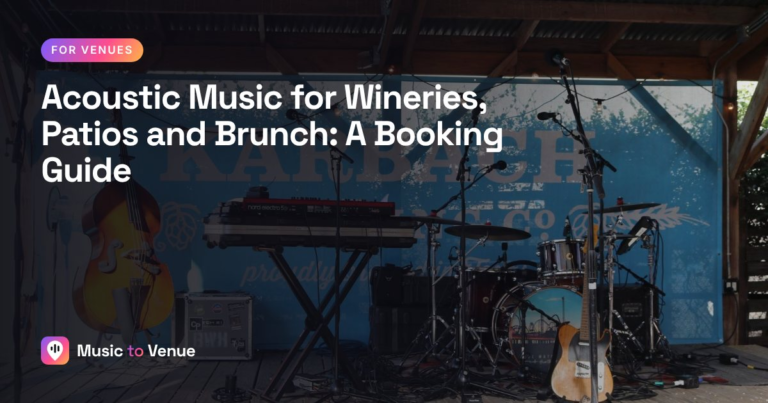 Venues Acoustic Music for Wineries, Patios and Brunch: A Booking Guide
Solo acts and duos are the easiest way to add live music to brunch, patios and tasting rooms. Here is how to book the right one.
Oct 29, 2026
 Venues What to Do When a Band Cancels Last Minute
A last minute cancellation does not have to ruin the night. Build a backup list, write a fair policy and know your plan B before you need it.
Oct 28, 2026