How Much Should Musicians Charge for a Bar Gig?
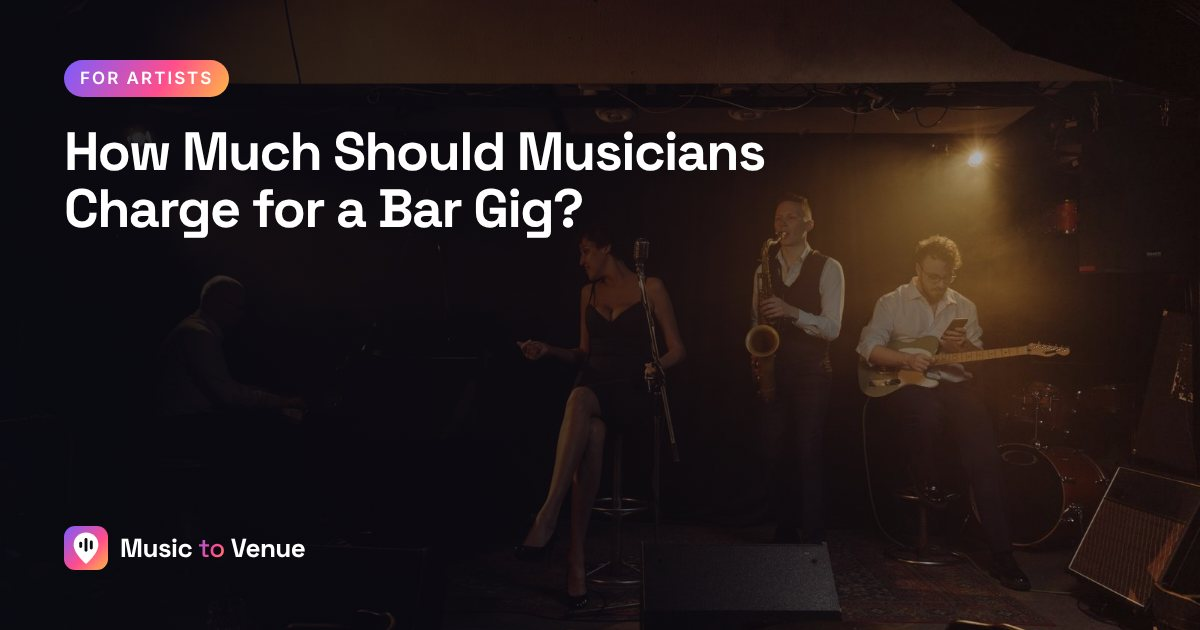
A common starting point for a bar gig is about $100 per musician, a figure that, as Hypebot has pointed out, has barely moved in decades. A better way to price is to build your number from the ground up: a base rate per musician, plus travel, plus gear and sound, adjusted for how many sets you play. Then you negotiate from a number you can defend instead of one you guessed.
Pricing feels awkward because most musicians never do the math. Do it once, write it down and the conversation with every venue gets easier.
Step 1: Set a base rate per musician
Start with what one player needs to make for a standard night, usually three to four hours on site including setup and teardown. Think about it as an hourly rate across the whole night, not just the time on stage.
Ask yourself three questions:
- How many hours does the gig really take, door to door, including rehearsal time for new material?
- What would that time be worth at your day job or teaching rate?
- What are other acts at your level charging in your city?
For many working cover and original acts, a base somewhere around $100 to $200 per player for a standard bar night is a typical range. Newer acts sit lower, established acts with a following sit higher. Treat these as a starting point, not a rule.
Step 2: Add travel
Local gigs inside your normal radius usually do not need a separate travel charge. Beyond that, add one. Common approaches:
- A flat travel fee for each zone, such as one rate for nearby towns and a higher one for a longer drive.
- A per mile rate for the vehicles that carry gear.
- Lodging or a hotel room for anything that means driving home very late over long distances.
Decide your travel radius in advance and state it in your EPK and profile. It saves time on gigs that will never make sense.
Step 3: Account for gear and sound
If the venue has a house PA and an engineer, your costs drop. If you bring the PA, lights and someone to run them, charge for it. Speakers, mixers, cables and repairs wear out, and a sound engineer is another person who needs to be paid.
Step 4: Adjust for sets and time
A standard bar night is often three 45 minute sets or two 60 minute sets. Longer nights, extra sets or early load in should cost more. Decide your add on price for an extra set before anyone asks.
Putting the math together
Here is an example for a four piece band. The numbers are illustrative only, to show the structure. Plug in your own.
| Line item | Example | Amount |
|---|---|---|
| Base rate | 4 musicians x $150 | $600 |
| Sound | Band supplies PA | $100 |
| Travel | Outside local radius | $75 |
| Extra set | Fourth set requested | $100 |
| Total quote | $875 |
The same act as a duo with the house PA and no travel might quote $300. Having both formats lets you say yes to more rooms.
How to think about the venue’s side
A bar is not paying for music. It is paying for more customers who stay longer and spend more. If your act brings 30 extra people who each spend $25, that is $750 in extra sales, and your fee looks reasonable. If you bring no one, any fee feels expensive.
That is why your draw, your social following in the local area and your willingness to promote the date all affect what you can charge. Track how many people you bring and mention it when you negotiate.
Negotiating without underselling
- Quote a range, then a number. Share a range in your profile, then a specific quote for the specific night.
- Trade, do not just discount. If they push back, offer a smaller lineup, fewer sets or a weeknight rate instead of cutting the same show.
- Offer a residency rate. A modest discount for a weekly or monthly slot gives you steady income and the venue a predictable cost.
- Ask about extras. Food, drinks, parking and a guest list cost the venue little and add real value for you.
- Be careful with door deals. A percentage of the cover or bar sales can pay well for acts with a strong draw. If you are not sure you can fill the room, ask for a guaranteed minimum.
- Get it in writing. Fee, set times, arrival time, payment method and when you get paid.
Agreements are between you and the venue. This is general information, not legal advice, so use a written agreement you understand and get advice if a deal is unusual.
When to raise your rates
- You are booked most weekends and turning down dates.
- Venues ask you back without being pitched.
- Your crowd is clearly growing from show to show.
- You have added players, gear or production that improves the show.
Raise prices for new venues first, then adjust regulars at a natural point like the start of a new season, with plenty of notice.
Common pricing mistakes
- Quoting a flat band fee without dividing it per player and realizing everyone is underpaid.
- Forgetting setup and teardown time.
- Giving away travel and sound for free.
- Dropping your price on the first pushback without asking for anything in return.
Show your price where bookers can see it
On Music to Venue, your artist profile includes a fee range and travel radius along with video and genres, so venues in Las Vegas and Salt Lake City know where you stand before they reach out. Offers spell out fee, set times and logistics, so there are fewer surprises. Venues pay artists directly, and Music to Venue invoices its booking fee through Stripe when the booking is confirmed. Read how it works or learn more for artists.
Ready to get booked at a fair price? Create your free artist profile during early access.
FAQ
How much do bar gigs usually pay per musician?
A common figure is about $100 per musician, which has barely changed in decades. Many working acts aim higher once they factor in hours, travel and gear.
Should I charge extra for bringing my own PA?
Yes, in most cases. Your sound system costs money to buy and maintain, and venues without house sound are getting real value from it.
Is a door deal better than a flat fee?
It can be if you reliably draw a crowd. If you are not sure, ask for a guaranteed minimum plus a percentage so you are covered on a slow night.
How should I price an extra set?
Decide an add on rate before you negotiate, often a portion of your base fee. That way you can answer quickly and consistently when a venue asks.
Book live music without the back and forth
Music to Venue connects bands, solo artists and DJs with venues in Las Vegas and Salt Lake City. Free to join. Artists keep 100% of their fee.
Keep reading
 Artists Covers vs Originals: What Venues Really Want to Book
Most venues want mostly covers, but originals win in the right rooms. Here is how to match your set to the venue and get rebooked.
Oct 27, 2026
 Artists How to Promote a Gig So the Room Is Full
Full rooms happen when artists and venues promote together on a plan. Here is a three week gig promotion timeline you can copy.
Oct 25, 2026
 Artists Gig Contracts 101: What Every Live Music Agreement Should Include
A good gig agreement puts the fee, times, logistics and cancellation terms in writing so nobody argues on show night. Here is what to include.
Oct 23, 2026