Live Music at Utah Bars and Restaurants: What Owners Should Know
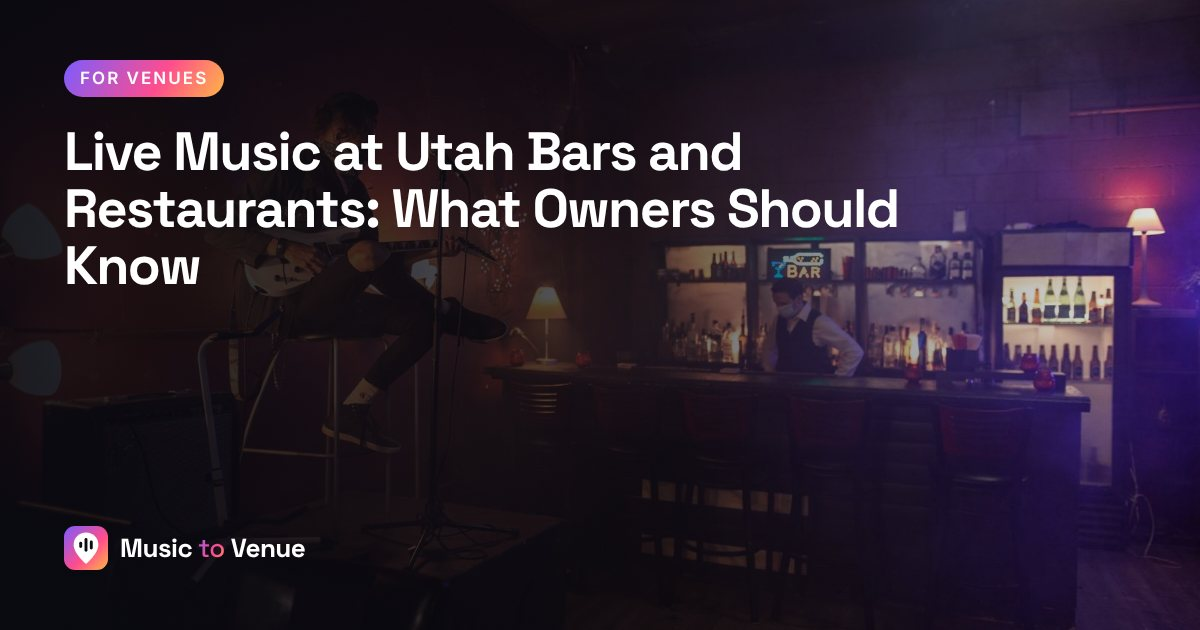
Utah bars and restaurants can host live music, but three things shape how you do it: your alcohol license type, local noise and hours rules, and music licensing for the songs being performed. Get those right and live music becomes one of the easiest ways to bring people in on a slow night. This guide covers each at a high level so you know which questions to ask.
This is general information, not legal advice. Rules change, so confirm details with the Utah Department of Alcoholic Beverage Services (DABS), your city and your own attorney before you act on them.
Your alcohol license sets the ground rules
Utah treats bars and restaurants as different license types, and the difference matters for live music. Bar licenses are limited by a population based quota, which is one reason a bar license is valuable and why owners are careful with it.
Bars
According to the DABS Bar License Handbook, bar licensees may sell alcohol from 10 a.m. to 1 a.m. The handbook also says minors may not be on bar premises, and it specifically lists band members among the people who cannot be employed there if they are under 21. That means you need to confirm every performer’s age before booking, not just the band leader’s.
Restaurants
Restaurant licenses work differently. Alcohol is tied to food service and the intent to dine, and restaurants can generally admit guests under 21. That makes restaurants a better fit for family friendly shows, brunch sets and all ages audiences, but you still need to follow your license’s service rules while music is playing. Check your specific license for hours and requirements.
Breweries, event venues and others
Utah has several other license types, and each comes with its own conditions. If you are a brewery taproom, reception center or hotel, look up the handbook for your license on the DABS website or ask your compliance contact before you plan a regular music night.
Noise and hours
Noise rules are set locally, so the answer in downtown Salt Lake City may differ from Sugar House, Park City or Ogden. Salt Lake City’s code, for example, sets decibel limits measured at the property line, with lower limits overnight and lower limits in residential zones than commercial ones. Outdoor amplified sound on public property can require a permit.
Practical steps that keep you out of trouble:
- Look up your city’s noise ordinance and note the evening cutoff and the limits for your zone.
- Know what is next door. A residential neighbor changes everything, especially for patio shows.
- End outdoor sets earlier than indoor ones.
- Give the act a stage volume target and a hard end time in writing.
- Consider a simple decibel meter app so staff can check levels at the door.
- Keep a contact sheet for neighbors so they call you before they call the city.
Music licensing basics
This is the part many owners miss. When copyrighted songs are performed in public, the business hosting the performance generally needs a public performance license. That applies to cover bands, DJs and often recorded background music too. It is usually the venue, not the band, that is expected to hold these licenses.
Who issues them
In the United States, public performance rights are mostly handled by performing rights organizations (PROs):
- ASCAP
- BMI
- SESAC
- GMR (Global Music Rights)
Each represents a different catalog of songwriters and publishers, so one license rarely covers everything. Fees depend on factors like capacity, how often you host music and whether you charge a cover. Contact each PRO directly for a quote rather than relying on secondhand numbers.
What about original music?
If an artist plays only their own songs, the licensing picture changes, but most bar sets mix originals and covers. Assume you need coverage unless you have confirmed otherwise.
Background music
Personal streaming accounts are generally licensed for personal use, not for playing in a business. If you stream between sets, use a service built for commercial use.
Live music compliance checklist
| Item | Who to check with | Why it matters |
|---|---|---|
| License type and hours | DABS handbook for your license | Sets service hours and who can be on premises |
| Performer ages | The artist, before booking | Bars cannot employ band members under 21 |
| Noise limits | Your city code | Limits vary by zone and time of night |
| Outdoor or patio sound | Your city | May need a permit or earlier end time |
| PRO licenses | ASCAP, BMI, SESAC, GMR | Covers public performance of songs |
| Business license and occupancy | Your city and fire marshal | Crowds and stages change the room |
| Insurance | Your insurance agent | Confirm events and performers are covered |
Running the night well
Compliance is the floor, not the goal. The goal is a night people come back for.
- Match the act to the room. A loud four piece rock band in a 60 seat restaurant is a bad night for everyone. A solo acoustic set might be perfect.
- Put the offer in writing. Fee, arrival time, set times, breaks, volume expectations, food and drink, parking and load in.
- Pay on time, in the agreed way. Musicians talk, and reliable venues get the best acts.
- Promote together. Share the date on your channels and ask the artist to do the same.
- Track the results. Compare sales on music nights to the same nights without music.
Why more venues are adding music
Live music is a proven draw, and owners know it. In one UK survey of 800 venues, 87% planned to expand live music, and the top barrier was the time it takes to find and book artists. That is the problem Music to Venue is built to solve.
Music to Venue is a booking marketplace in early access in Salt Lake City and Las Vegas. You post open dates, describe the night in plain language and Smart Match ranks artists who fit. Artist profiles show video, genres, fee ranges and travel radius, and offers spell out fee, set times and logistics. See how it works.
Own or manage a Utah bar, restaurant or brewery? Join free during early access and start booking local talent. Questions? Contact us.
FAQ
Can a Utah bar book a band with members under 21?
According to the DABS Bar License Handbook, minors cannot be on bar premises and cannot be employed there, including as band members. Confirm every performer’s age before you book.
Do I need a music license if the band plays covers?
Generally yes. Public performance of copyrighted songs is usually licensed through PROs like ASCAP, BMI, SESAC and GMR, and the venue is typically the party expected to hold those licenses.
What time does live music have to end in Salt Lake City?
It depends on your location, zone and whether the music is indoors or outdoors. Check your city’s noise ordinance and keep in mind Utah bars stop selling alcohol at 1 a.m.
Is this legal advice?
No. This is general information to help you ask the right questions. Confirm details with DABS, your city and your attorney.
Book live music without the back and forth
Music to Venue connects bands, solo artists and DJs with venues in Las Vegas and Salt Lake City. Free to join. Artists keep 100% of their fee.
Keep reading
 Venues How AI Matching Is Changing the Way Venues Book Live Music
AI matching turns a plain language description of your night into a ranked shortlist of artists. Here is how it works and where human judgment still matters.
Oct 30, 2026
 Venues Acoustic Music for Wineries, Patios and Brunch: A Booking Guide
Solo acts and duos are the easiest way to add live music to brunch, patios and tasting rooms. Here is how to book the right one.
Oct 29, 2026
 Venues What to Do When a Band Cancels Last Minute
A last minute cancellation does not have to ruin the night. Build a backup list, write a fair policy and know your plan B before you need it.
Oct 28, 2026